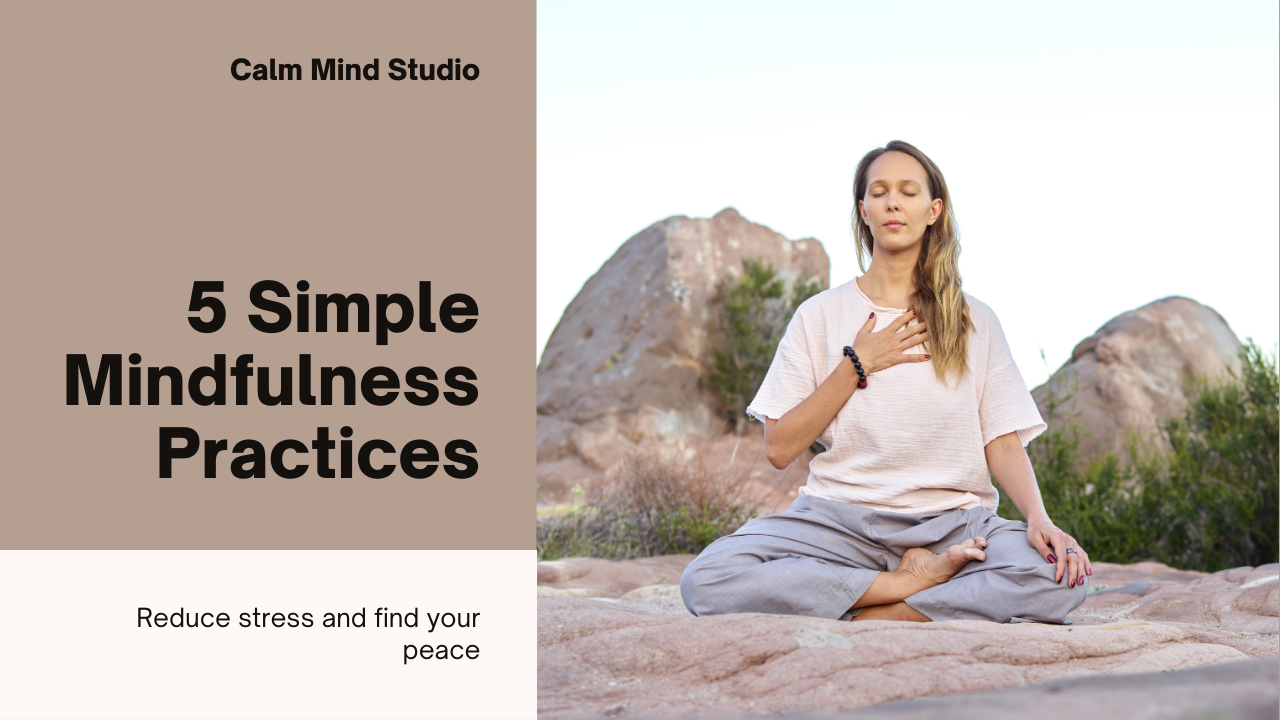
1. Mindful Breathing 🌬️
Why It Works:
When we’re stressed, our breathing becomes shallow, which signals to our brain that we’re in danger—escalating the stress response. Mindful breathing helps counteract this by slowing down the nervous system and promoting relaxation.
How to Practice:
- The 4-7-8 Technique: Inhale for four seconds, hold for seven, and exhale for eight.
- Box Breathing: Inhale for four seconds, hold for four, exhale for four, and pause for four.
- Simple Awareness: Take a few moments to focus solely on your breath, noticing how it moves in and out of your body.
Even just 60 seconds of mindful breathing can create a noticeable shift in your stress levels.
2. Grounding Through the 5-4-3-2-1 Technique 🌿
Why It Works:
When stress overwhelms you, your mind often spirals into anxious thoughts about the past or future. Grounding techniques help bring you back to the present moment, breaking the cycle of stress.
How to Practice:
Identify: ✔️ 5 things you can see ✔️ 4 things you can touch ✔️ 3 things you can hear ✔️ 2 things you can smell ✔️ 1 thing you can taste
This technique shifts your focus from racing thoughts to tangible sensations, helping you regain control and calm your mind.
3. The One-Minute Body Scan 🧘♂️
Why It Works:
Stress often manifests physically—tight shoulders, clenched jaws, or a tense stomach. A body scan helps you become aware of these sensations and release them.
How to Practice:
- Sit comfortably and close your eyes.
- Start at the top of your head and mentally “scan” down to your toes.
- Notice areas of tension and consciously relax them.
Even a quick scan before a stressful meeting or after a long day can make a difference.
4. Mindful Walking 🚶♀️
Why It Works:
Mindful walking combines movement and awareness, making it perfect for those who struggle with traditional meditation.
How to Practice:
- Walk at a comfortable pace, paying attention to how your feet connect with the ground.
- Notice the sights, sounds, and smells around you.
- Focus on the rhythm of your steps and your breath.
Try a short 5-minute mindful walk during your lunch break or after work to reset your mind and body.
5. Gratitude Journaling 📖
Why It Works:
Studies show that practicing gratitude can reduce stress, improve sleep, and boost happiness. Focusing on the positives in your life shifts your perspective away from what’s causing stress.
How to Practice:
- Write down three things you’re grateful for every day.
- Be specific: instead of “I’m grateful for my job,” try “I’m grateful for my supportive coworker who helped me today.”
- Reflect on small moments, like a kind gesture or a beautiful sunset.
This practice helps rewire your brain to focus on positivity rather than stressors.