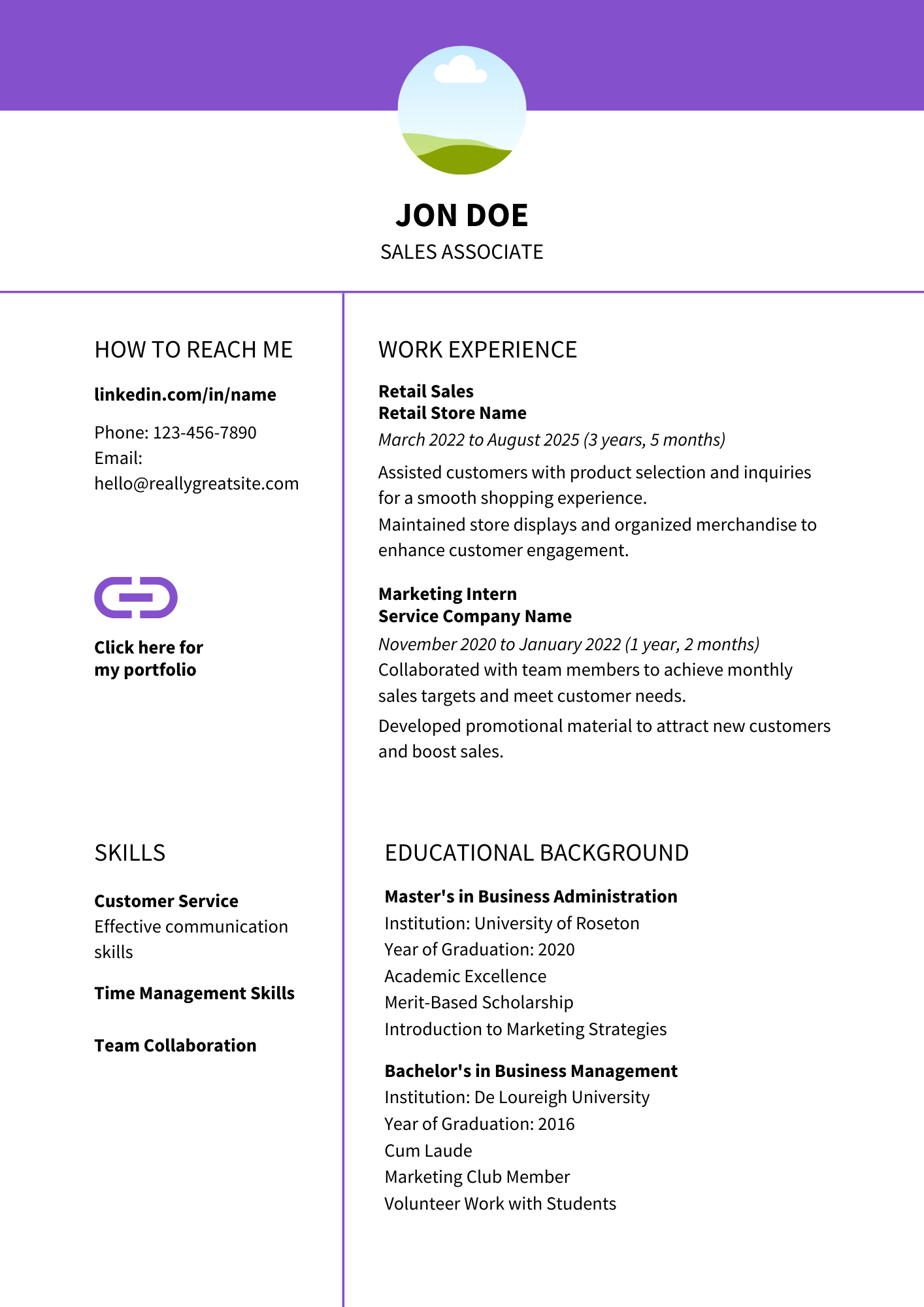
1. What Employers Really Look For 👀
Many first-time job seekers worry about their lack of experience, but hiring managers care about more than just past jobs. Here’s what they actually want to see:
- Transferable Skills – Communication, teamwork, problem-solving, and adaptability.
- Work Ethic & Potential – A willingness to learn and contribute.
- Passion & Enthusiasm – Employers love candidates who show genuine interest in the role.
Your job is to highlight these strengths throughout your resume, even if you haven’t held a formal job before.
2. Resume Formatting Basics 📄
A cluttered or unorganized resume can hurt your chances before an employer even reads a word. Keep it clean and professional:
✅ Keep It Clean & Easy to Read
- Length: Stick to one page (unless you have significant experience).
- Font: Choose something simple (e.g., Arial, Calibri, Times New Roman, 10-12 pt size).
- File Format: Save and send as a PDF to keep formatting intact.
✅ Must-Have Sections
- Header: Name, contact info, LinkedIn (if relevant).
- Professional Summary (Recommended if you don’t have much experience).
- Education: List relevant coursework, honors, and achievements.
- Skills: Emphasize both hard and soft skills.
- Experience & Activities: Include internships, volunteering, freelance work, and projects.
- Certifications & Extracurriculars: If applicable, list any certifications or relevant involvement.
3. How to Make Your Resume Stand Out (Even Without Job Experience) ✨
a. Crafting a Strong Professional Summary
Your summary is the first thing employers see—make it count!
Example:
Motivated and detail-oriented college student with strong communication and organizational skills. Passionate about digital marketing and eager to apply analytical skills to real-world projects. Adept at teamwork, problem-solving, and learning quickly in fast-paced environments.
b. Highlighting Education & Relevant Coursework
No job experience? No problem! Your education section can work in your favor:
- Degree, school, and expected graduation date.
- Relevant courses (e.g., Business Analytics, Graphic Design, Computer Science).
- Academic achievements (Dean’s List, scholarships, honor societies).
c. Showcasing Transferable Skills
Don’t just list skills—demonstrate how you’ve used them. Some examples:
|
Skill |
Example from Real Life |
|
Leadership |
Led a team project in school or managed a club event. |
|
Communication |
Wrote articles for a school paper or presented in class. |
|
Organization |
Balanced multiple deadlines in coursework or planned an event. |
|
Technical Skills |
Proficiency in Excel, coding, or social media management. |
d. Leveraging Volunteer Work, Internships & Extracurriculars
Employers value experience in any form, paid or unpaid. Some examples:
- Volunteering: Assisted at a food bank → Customer service & teamwork.
- Internships: Even a short-term internship shows hands-on experience.
- Clubs & Organizations: Member of a debate team? That shows communication and persuasion skills!
e. Including Personal & Academic Projects
Don’t underestimate the power of projects! Examples:
- Built a website → Technical skills & creativity.
- Created a business plan for a class → Problem-solving & strategy.
- Managed a personal blog or social media page → Writing & marketing skills.
4. Optimizing Your Resume for ATS (Applicant Tracking Systems) 🤖
Most companies use ATS software to filter resumes before a human even reads them. To pass the test:
- Use keywords from the job description (e.g., “customer service,” “data analysis”).
- Avoid fancy fonts, images, or graphics—ATS can’t read them.
- Use standard section headings like “Work Experience” instead of “My Journey.”
5. Resume Mistakes to Avoid ❌
- Typos & Grammar Mistakes – Proofread everything, or use Grammarly.
- Fluff & Buzzwords – Avoid vague phrases like “team player.” Instead, show how you’ve worked in a team.
- One-Size-Fits-All Resumes – Tailor your resume for each job.
- Adding Irrelevant Information – Stick to skills and experiences relevant to the job.