1. The Psychology of Written Goals: Why Your Brain Loves Them
✔ Commitment & Consistency Bias
Psychologist Robert Cialdini found that when we write something down, our brain sees it as a commitment (Cialdini, 1984). This triggers the consistency principle—we’re wired to follow through to avoid cognitive dissonance.
Example: Writing "I will exercise 3x a week" makes you more likely to do it than just thinking it.
✔ The Zeigarnik Effect: Unfinished Tasks Haunt Us
Ever had a task stuck in your head until you wrote it down? That’s the Zeigarnik Effect—our brains fixate on incomplete goals (Zeigarnik, 1927). Writing them down reduces mental clutter while keeping them subconsciously active.
✔ External Storage Theory
Your brain isn’t designed to store every intention. Writing frees up mental RAM, allowing you to focus on execution instead of remembering.
Key Takeaway:
"Writing turns abstract thoughts into concrete tasks, making your brain take them seriously."
2. The Neuroscience: How Writing Rewires Your Brain
✔ Handwriting vs. Typing: Does It Matter?
A Princeton study (Mueller & Oppenheimer, 2014) found that handwriting engages the brain more deeply than typing, improving retention and understanding.
Why?
- Activates the reticular activating system (RAS), priming your brain to notice relevant opportunities.
- Strengthens motor memory, making goals feel more tangible.
✔ Dopamine & Reward Loops
When you check off a written goal, your brain releases dopamine, reinforcing motivation (Berridge & Kringelbach, 2015).
Pro Tip:
"Keep goals visible—your brain will subconsciously work toward them."
3. Scientific Proof: Studies Show Written Goals Work
|
Study |
Key Finding |
Success Rate Increase |
|
Dominican University (Matthews, 2015) |
Written goals + accountability = higher achievement |
42% more likely |
|
Harvard MBA Study |
3% who wrote goals earned 10x more than peers |
1,000% higher earnings |
|
British Cycling’s "Marginal Gains" |
Tiny written improvements led to Olympic dominance |
7 Gold Medals (2012) |
Conclusion: The evidence is overwhelming—writing works.
4. How to Write Goals the Right Way (Science-Backed Tips)
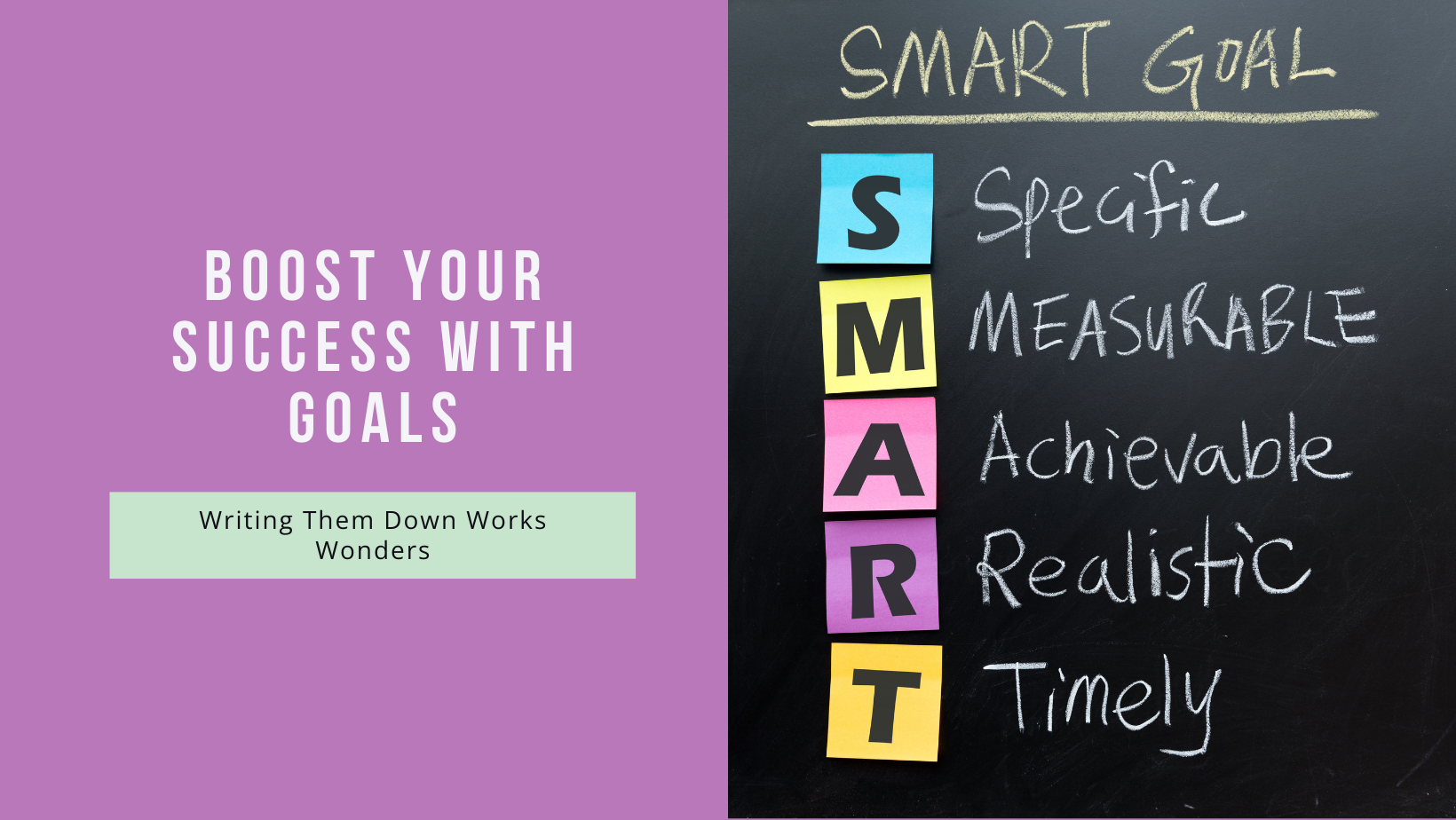
✔ Use the SMART Framework
- Specific – "Lose 10 lbs" vs. "Get fit."
- Measurable – Track progress (apps like Notion or Habitica help).
- Achievable – Challenging but realistic.
- Relevant – Aligns with bigger life vision.
- Time-Bound – "By December 2025."
✔ Handwrite First, Then Digitize (If Needed)
- Start with pen & paper for deeper encoding.
- Transfer to a digital tracker (Google Docs, Trello) for reminders.
✔ Place Goals Where You’ll See Them Daily
- Mirror, phone wallpaper, desk sticky note.
- Accountability partner? Share them for extra motivation.
✔ Review Weekly
- Studies show weekly check-ins boost success (Locke & Latham, 2002).
5. Common Mistakes (And How to Fix Them)
❌ Too Many Goals → Focus on 3-5 max to avoid overwhelm.
❌ Vague Wishes → Use SMART criteria.
❌ No Tracking → Use a habit tracker (Try Streaks or Loop Habit Tracker).