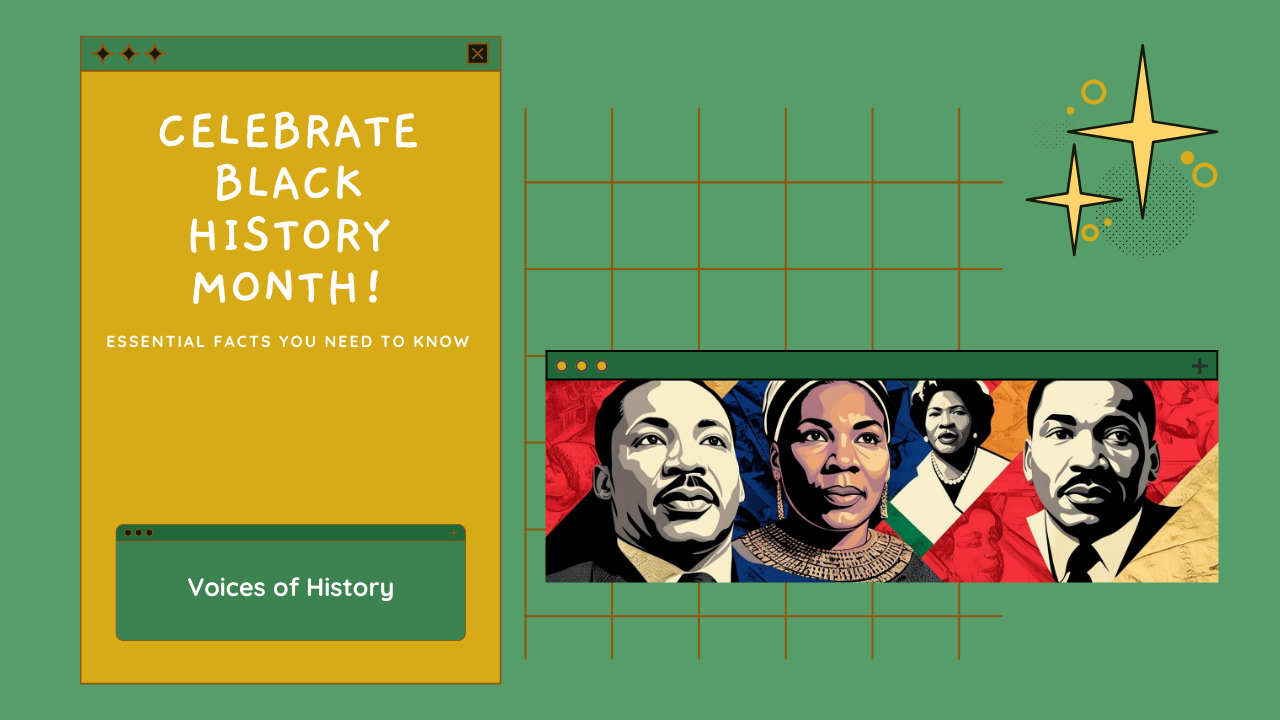
Fact #1: It Started as "Negro History Week"
The origins of Black History Month trace back to historian Carter G. Woodson, who launched Negro History Week in 1926. Woodson believed that Black history should be recognized and celebrated throughout the year, and his initiative aimed to highlight the achievements and contributions of African Americans that were often overlooked. The celebration expanded to a full month in 1976, during the United States’ bicentennial year.
Fact #2: February Was Chosen for a Reason
February was selected for Black History Month to coincide with the birthdays of two important figures in Black history: Abraham Lincoln (February 12) and Frederick Douglass (February 14). Lincoln, the 16th President of the United States, issued the Emancipation Proclamation, which declared the freedom of slaves. Douglass, a former enslaved person, became one of the most influential voices in the abolitionist movement and a champion for equality.
Fact #3: Each Year Has a Unique Theme
Each year, the Association for the Study of African American Life and History (ASALH) sets a unique theme to guide the celebration of Black History Month. The themes highlight various aspects of Black heritage, culture, achievements, and struggles. This evolving focus helps shine a light on different elements of African American life and history each year.
Fact #4: It’s Celebrated Globally
While Black History Month originated in the United States, its impact has spread beyond national borders. Canada and the United Kingdom also recognize Black History Month, albeit at different times of the year. In Canada, it's celebrated in February, while the UK observes it in October. This global recognition highlights the importance of Black history worldwide.
Fact #5: It's More Than Just the Past
Black History Month is more than just a reflection on history—it's a celebration of Black excellence, culture, and contributions that continue to shape the future. From the arts to science, politics to social movements, Black individuals and communities have played—and continue to play—a crucial role in driving change and advancing society.